|
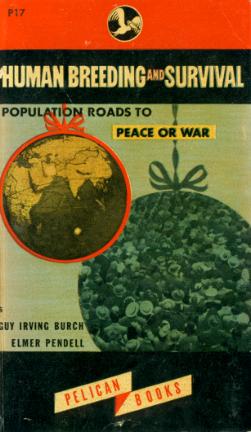
Pelican / Mentor |
|
|
Click the group of books beginning with number:
|
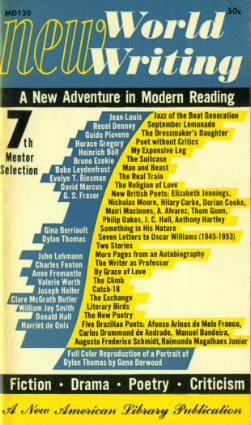
One of the least collectible labels by today's vintage paperback fanatics, Mentor was the flip-side of the New American Library coin, presenting non-fiction offerings where Signet put out mostly fiction. Before, when Penguin was the label giving us great fiction titles, Pelican was the non-fiction label. There are probably two reasons why Mentor is a neglected publisher by today's collectors. First, these were used as textbooks by my generation. Yes, it's true ... high school and college texts didn't always cost two hundred bucks apiece. In the 50's and 60's, they sometimes cost as little as 35¢. But textbooks have never been very high on the collector's list. Next, books from the 50's were not always politically correct. Now, when we're talking about fiction, that little point often makes a book even more collectible. It's looked at as sort of cute ... an oddity. But when you realize such things were being taught in our high schools and colleges as FACTS in sociology textbooks, many people find that it's not very cute at all. "Social Sciences" depict the beliefs of the era in which the book was written; and scientific observations are often affected by those beliefs. As a result, many sociologists of the 1950's, who were lauded for their findings then, are criticized for those same findings now. But NAL never backed down in the face of criticism. For example, Margaret Mead was a frequently used author, though her views on sexuality and behavior were controversial during the 50's and 60's, and remain so today. Mentor printed such diverse volumes as the Koran and other holy books, numerous history books, plus texts on music, astronomy, physics, mathematics and the arts. Of particular interest is the New World Writing series of books. These presented essays, short stories, letters, poems, and other brief writings that had never before been printed in book form (some had been previously published in periodicals). This makes them true Paperback Originals, and many are quite collectible. Perhaps the most valuable is #7 (Mentor MD-130), which not only includes Jack Kerouac's first published writing in a periodical (under the name Jean-Louis), but also Joseph Heller's short story Catch-18, which he later released as part of his famous novel Catch-22.
The Mentor section was updated in September 2021
|